

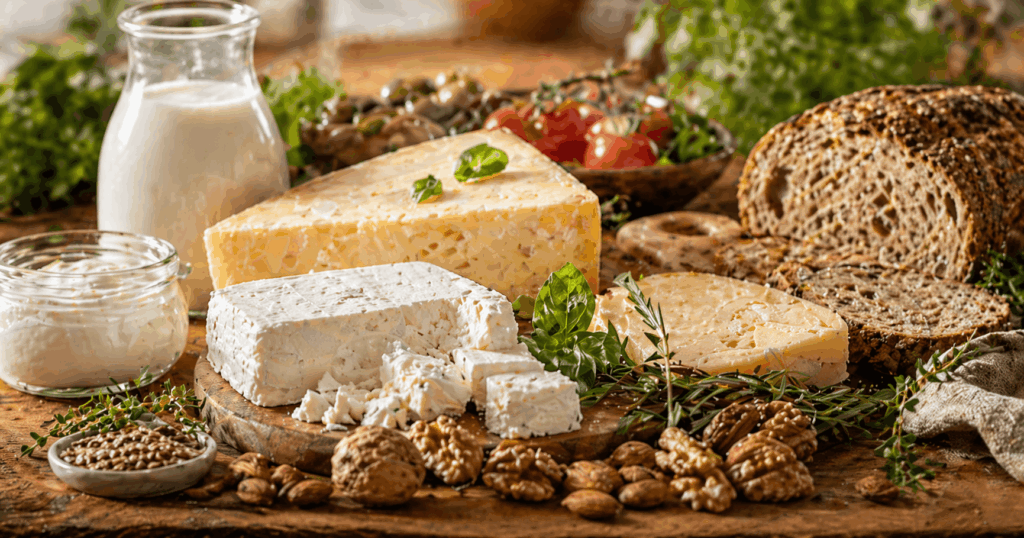
The Nutritional Value of Cheese
Cheese is one of the most timeless and valuable foods of the Mediterranean diet, combining high nutritional value with rich and authentic flavor. Its presence on the everyday table is not linked only to culinary enjoyment, but also to its meaningful contribution to a balanced and high-quality diet. When produced from carefully selected raw materials and with respect for cheese-making tradition, cheese gains even greater value for the consumer.
It is an important source of high-biological-value proteins, which support the proper function of the body and contribute to muscle development and recovery. At the same time, it is particularly rich in calcium, a nutrient essential for maintaining healthy bones and teeth. The presence of vitamins such as vitamin A and vitamin D further strengthens its nutritional role within a carefully considered daily diet.
The nutritional value of cheese is also closely connected to the quality of the raw material from which it is produced. Sheep’s and goat’s milk, especially when sourced from regions with a long livestock-farming tradition, give dairy products distinctive characteristics in terms of both flavor and nutritional composition. This close relationship between land, raw material, and production process is what makes cheese a product of substance, authenticity, and lasting value.
In modern nutrition, cheese can be part of a balanced lifestyle when consumed in moderation and within the framework of an overall well-structured diet. Whether it accompanies breakfast, becomes part of a light meal, or is included in a more elaborate recipe, it continues to offer flavor, quality, and nutritional richness. This is why it remains a product with a steady place in everyday life, combining tradition, nourishment, and enjoyment.